Serving DeKalb, IL and surrounding areas. (815) 981-3470
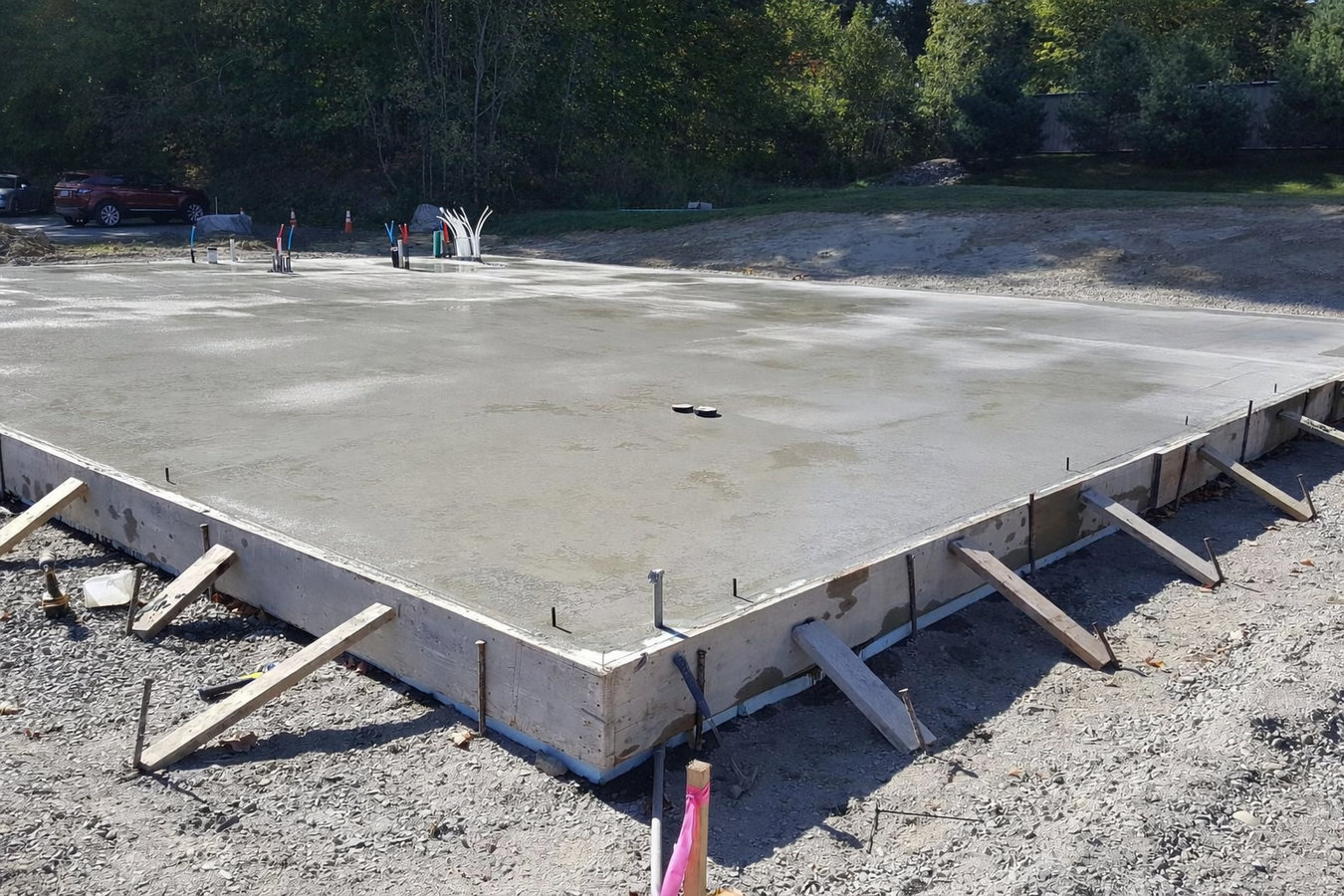
Starting a new build, garage, or addition in DeKalb and need a solid foundation first? We prep the ground right, go deep enough for Illinois frost depths, and handle permits so your project starts on solid footing.
Slab foundation building in DeKalb, IL means pouring a thick, reinforced concrete platform that serves as both the floor and the base your structure sits on, with the full process - permits, site prep, pour, and inspection - typically running one to two weeks once work begins.
A slab is one of the most common foundation choices for garages, workshops, room additions, and accessory structures in DeKalb. It is straightforward when done right and extremely durable when the ground prep matches local conditions. The challenge here is not the concrete itself - it is what goes underneath it. DeKalb sits on clay-heavy soil and has a deep frost line, both of which require preparation steps that are genuinely non-negotiable.
Slab foundation projects often connect to foundation installation for homeowners building larger structures that need full perimeter foundations, or to concrete footings for additions and outbuildings where the footing work is a separate scope.
If you are planning a new home, garage, workshop, or room addition in DeKalb, you need a foundation before anything else can be built. A slab is often the most practical and cost-effective choice for single-story structures and outbuildings. If you have a building permit in hand or are in the planning stage, this is the right time to talk to a concrete contractor.
Small hairline cracks in a concrete slab are common and usually harmless. But cracks wider than about a quarter-inch, cracks where one side is higher than the other, or cracks that keep getting longer are a sign the slab may be moving - possibly because of DeKalb's clay soil shifting beneath it. A contractor can assess whether repair or replacement is the right call.
When a slab shifts or settles unevenly - something that happens more often in DeKalb's clay-heavy soil - the walls above can rack slightly out of square. The first sign homeowners notice is a door or window that suddenly sticks, drags, or will not latch the way it used to. If this is happening in a room addition or garage built on a slab, the foundation is worth having evaluated.
DeKalb gets significant spring snowmelt and periodic heavy rain. If you regularly see standing water near the base of a slab-on-grade structure after wet weather, the drainage around the slab may be inadequate - or the slab itself may have settled in a way that traps water. Left unaddressed, this leads to erosion under the slab and eventually to cracking and movement.
The most common slab type for residential projects in DeKalb is the monolithic slab - a single pour where the main floor area and the thickened perimeter edges are formed and poured together. The edges go deeper to carry the wall loads above, while the interior is typically four inches thick over a compacted gravel base and moisture barrier. This approach works well for garages, workshops, and most single-story additions. For sites with uneven terrain or specific engineering requirements, a stem wall slab - where a separate perimeter wall is poured first and the slab placed on top - may be the right call.
No matter the slab type, DeKalb's frost depth of around 42 inches means the perimeter edges of any slab need to extend well below grade. This is a non-negotiable in this climate. It connects directly to how we approach concrete footings on every project - the footing depth determines whether the structure holds steady through freeze-thaw cycles or starts to shift after a few winters. For larger projects requiring a full perimeter structure, see our foundation installation services.
Best for garages, workshops, and single-story additions where speed, simplicity, and cost-efficiency matter.
Right for uneven sites, elevated structures, or projects where engineering calls for a separate perimeter wall below the slab.
Suits heavier load applications - like equipment bays or structures with interior bearing walls - that need extra support beneath the floor.
Two local conditions shape every slab project here. First, the frost line in DeKalb sits around 42 inches below grade - much deeper than in warmer parts of Illinois and far deeper than in southern states. The thickened edges of a slab foundation must reach below that depth, or the ground movement caused by repeated freezing and thawing will push the edges up and crack the structure above. This is not a design choice - it is a requirement driven by the climate, and it is one reason slab work here costs more per square foot than national averages suggest.
Second, DeKalb County sits on Drummer and Flanagan series soils - deep, clay-rich agricultural soils that are excellent for farming but shift under concrete as moisture levels change. Before any concrete is placed, the clay in the slab footprint typically needs to be excavated and replaced with compacted granular fill to create a stable, drainable base. We run into this same ground prep requirement on slab projects for homeowners in Aurora and Sycamore - the glacial soils across northern Illinois call for the same careful approach.
We schedule a time to walk your site before quoting anything. Soil conditions, access for trucks, and the specifics of your project all affect the price in ways that cannot be assessed over the phone. You will have a written estimate within one business day of the visit.
If a City of DeKalb permit is required - and for most new foundation work it is - we handle the application on your behalf. Plan for the permit review to take one to two weeks before work can begin. We also coordinate an 811 utility locate before any digging starts.
The crew excavates the area, removes clay soil, brings in compacted granular fill, lays a plastic moisture barrier, and sets the forms with steel reinforcement inside. In DeKalb, the thickened perimeter edges go down about 42 inches - this is the most critical and labor-intensive phase of the project.
Concrete trucks arrive early on pour day, and the slab is typically placed and finished in a few hours. The concrete then cures - plan for at least a week before heavy foot traffic and up to 30 days before vehicle loads. The city inspector visits to sign off, and we give you the permit documentation before we leave.
Free on-site estimate, written quote within one business day, permits handled for you.
(815) 981-3470We excavate to the depth DeKalb's frost line demands - roughly 42 inches for the perimeter edges - on every slab project, not just the ones where an inspector is watching. Footings that stop short of the frost line fail within a few seasons here. Doing it right the first time is the only approach that holds up.
The Drummer series soils throughout DeKalb County expand and contract with moisture changes, which is the leading cause of slab movement in this area. We excavate the clay in the footprint, replace it with compacted granular fill, and install drainage where the site calls for it. This ground prep is invisible once the concrete is down - but it is what the whole slab stands on.
The City of DeKalb requires permits and on-site inspections for foundation work, and we handle both from start to finish. The Portland Cement Association recommends that all foundation work follow local code requirements - we align with those standards and give you the documentation when the job is done. You will have a paper trail that protects your home's value.
Concrete poured in the wrong conditions - too cold, too hot, or with rain in the forecast - shows surface problems within months. We watch the forecast and will reschedule a pour rather than risk a slab that flakes or cracks before the first winter. You get the conditions the concrete needs, not just a convenient date on our calendar.
Every one of these points comes back to the same thing: slab foundation work in DeKalb requires local knowledge, not just concrete experience. The soil, the frost line, and the city permit process are all part of the job here, and we build them into every project from day one.
For technical guidance on concrete construction practices, the American Concrete Institute and the Portland Cement Association both publish homeowner-facing resources on slab construction and cold-weather concreting.
Full residential foundation installation in DeKalb, including basement and full-perimeter foundations with proper waterproofing and drainage.
Learn MoreConcrete footing work for walls, posts, decks, and additions - poured below the frost line and built to code for northern Illinois conditions.
Learn MoreSpring concrete work fills fast in DeKalb - reach out now to lock in a site visit and hold your spot on the schedule.