Serving DeKalb, IL and surrounding areas. (815) 981-3470
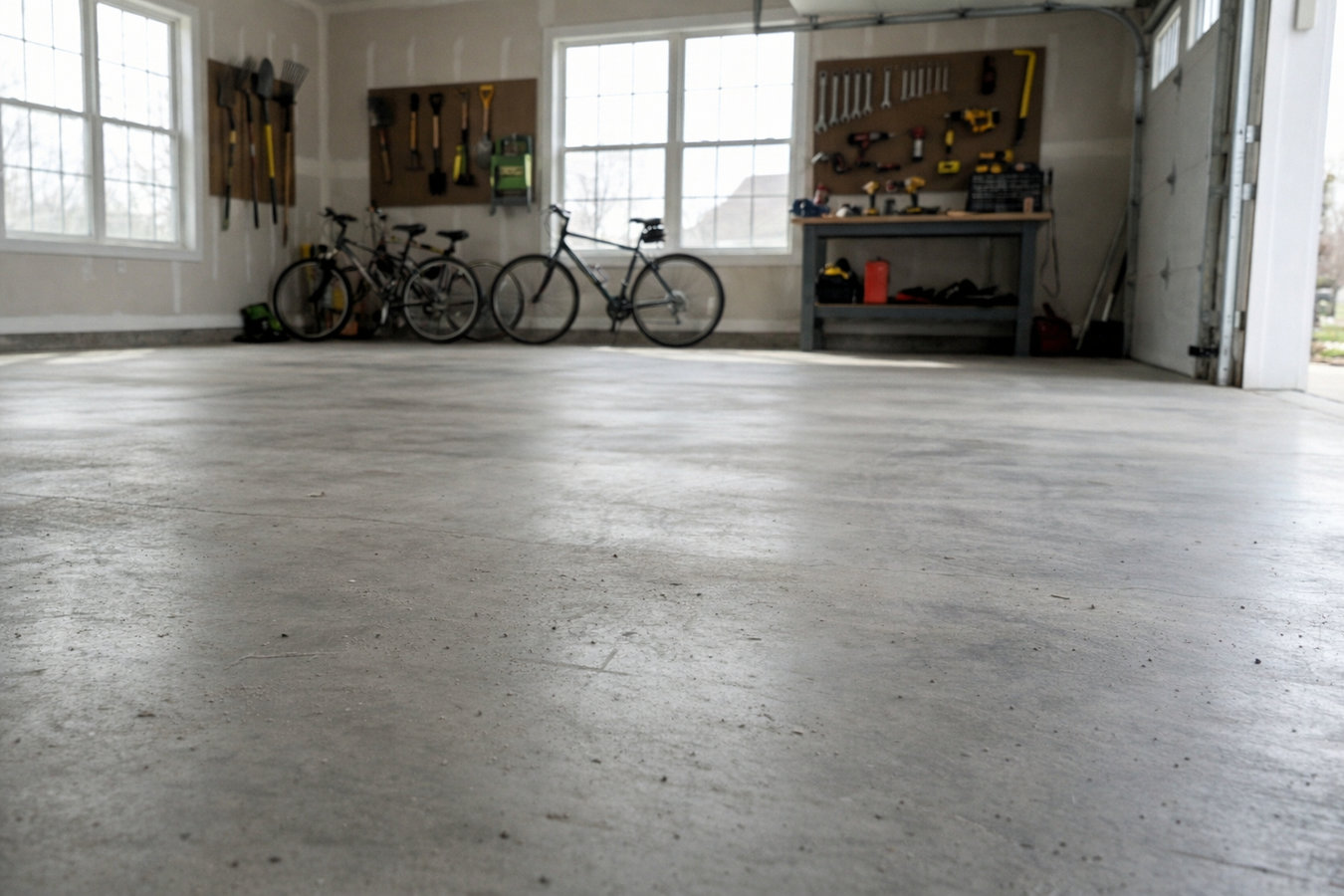
Flaking, cracking, or settling garage floor? We pour new concrete garage floors in DeKalb with proper vapor barriers, reinforcement, and control joints - built to survive northern Illinois winters and clay soil conditions.
Garage floor concrete in DeKalb, IL means removing the old slab, preparing a solid base with a vapor barrier, pouring fresh concrete at the correct thickness with reinforcement, and finishing the surface - most jobs take one to two days of active work followed by a seven-day wait before you can park on it.
If your garage floor is pitting, cracking, or has sections that no longer sit level, you are probably past the point where patching makes sense. Homes in DeKalb built between the 1950s and 1980s often have original floors that were poured without today's moisture protection standards - once those slabs start to go, they tend to go fast.
Some homeowners pair a garage floor replacement with decorative concrete finishes - an epoxy-style coating or stained surface that makes the floor easier to clean and better-looking than plain gray. That option is worth discussing when you call for your estimate.
If the surface near your garage door is peeling away in thin layers, road salt is likely the cause. DeKalb roads are heavily salted from November through March, and that salt gets tracked in on your tires and boots every day. Once flaking starts in this area, it spreads and will not stop on its own.
Hairline cracks are normal in any slab. But if you can fit a pencil tip into a crack, or if cracks run diagonally from corners or spread in a web pattern, the slab may be shifting underneath. In DeKalb's clay-heavy soils, seasonal ground movement opens these cracks wider every winter.
A properly poured garage floor slopes slightly toward the door so water drains out. If puddles sit in the middle or back of your garage after a spring rain or when snow melts off your car, the floor has settled unevenly. Standing water accelerates concrete damage and can encourage mold growth along your walls.
The edges and corners of a slab - especially near the garage door threshold where vehicles roll over them daily - are the first places to show serious wear. If you can kick loose chunks from the corners, the structural integrity of the slab is compromised and patching is unlikely to hold long-term.
A standard residential garage floor is four inches thick - the right call for most passenger vehicles. If you regularly park a truck, store heavy equipment, or have soft clay soil underneath, we often recommend five to six inches for added load capacity. Reinforcement - either steel mesh or rebar - goes inside the slab before the pour, holding it together if the ground shifts. These decisions are made upfront, because they cannot be changed once the concrete is set.
Surface finish options range from a simple broom texture - slightly rough for traction, the most common choice for garages - to a smooth troweled surface or a decorative coating applied after curing. For homeowners who want a cleaner look and an oil-resistant surface, we discuss concrete floor installation options that include specialty coatings and sealers, which are applied once the slab has fully cured at 28 days.
Best for most homeowners - slip-resistant, low-maintenance, and priced fairly for the square footage.
Right for garages that see trucks, heavy equipment, or repeated high-load traffic where extra thickness matters.
Suits homeowners who want an oil-resistant, easy-to-clean surface that looks better than plain gray concrete.
DeKalb sits in northern Illinois and sees temperature swings that put concrete through repeated freeze-thaw cycles every winter. Water works its way into unsealed or cracked surfaces, freezes overnight, and forces those openings wider with each season. Road salt - heavy on DeKalb streets from November through March - gets tracked into every garage and is one of the most aggressive things a concrete surface can face. These are not abstract concerns: they are the reason so many garage floors in older DeKalb homes look the way they do after 30 or 40 years without treatment.
The glacially deposited clay-heavy soil common across DeKalb County adds another challenge. Clay expands when wet and contracts when dry, putting stress on slabs from below each season. Proper base preparation - removing clay near the surface and replacing it with compacted gravel before any concrete is poured - is what separates a floor that holds up from one that starts cracking in a few years. We bring the same base-prep standards to homeowners in Sycamore and Batavia where the same soil conditions apply.
We schedule a visit to look at your garage in person - we need to see the existing slab and site access before giving you a price. The visit usually takes 20 to 30 minutes. A written estimate covering demolition, base prep, reinforcement, and finish follows within one business day.
Before the crew arrives, your garage needs to be completely empty - every car, shelf, bin, and tool. Plan to be without the garage for at least a week. We let you know if there is anything else to prepare, and we confirm your start date once the schedule is set.
We break up and haul away the old slab, then grade and compact the ground and lay a moisture barrier. This is the most important part of the job - base preparation done right is what keeps the new slab from shifting or cracking. Concrete is then poured, leveled, jointed, and finished in a single day.
The floor needs 24 to 48 hours before light foot traffic and a full seven days before any vehicles. In cooler DeKalb weather, we may recommend waiting longer. Before we leave, we walk through the finished floor with you, explain care instructions, and discuss whether a sealer application makes sense for your situation.
We respond within 1 business day. No obligation after your estimate. Someone from our team will call to schedule a free on-site visit and walk through the project with you before any work starts.
(815) 981-3470Clay-heavy glacial soil is common across DeKalb County. We account for it on every job by removing the clay near the surface, grading, and compacting a proper gravel base before any concrete is poured. That step is what keeps new slabs from shifting and cracking within a few seasons.
Every project starts with a free on-site visit and a written estimate that spells out what is included - demolition, base prep, thickness, reinforcement, and finish. No price changes on the day of the job, no verbal-only quotes, no surprises when the invoice arrives.
The American Concrete Institute sets guidelines for how concrete should be mixed and handled in cold temperatures. We follow those standards and know when DeKalb's shoulder seasons - early spring and late fall - call for additional precautions to make sure the slab cures correctly.
In DeKalb's climate, sealing a garage floor is a smart investment - it blocks road salt and moisture from working into the surface. We explain when to seal, what type of sealer works for your finish, and how often to repeat it. That guidance is part of every job, not a separate charge.
A garage floor built on a properly prepared base, poured at the right thickness, and sealed for DeKalb winters can last 30 to 50 years. We focus on the steps that determine that outcome - not just the surface you see on day one.
Upgrade beyond plain gray with a stamped or stained finish that makes your garage floor easier to clean and better-looking every day.
Learn MoreInterior concrete floor work for basements, workshops, and utility spaces - same climate-ready standards as our garage floor pours.
Learn MoreSpring slots fill fast once the weather turns - reach out now to get on the schedule before the season rush begins.