Serving DeKalb, IL and surrounding areas. (815) 981-3470
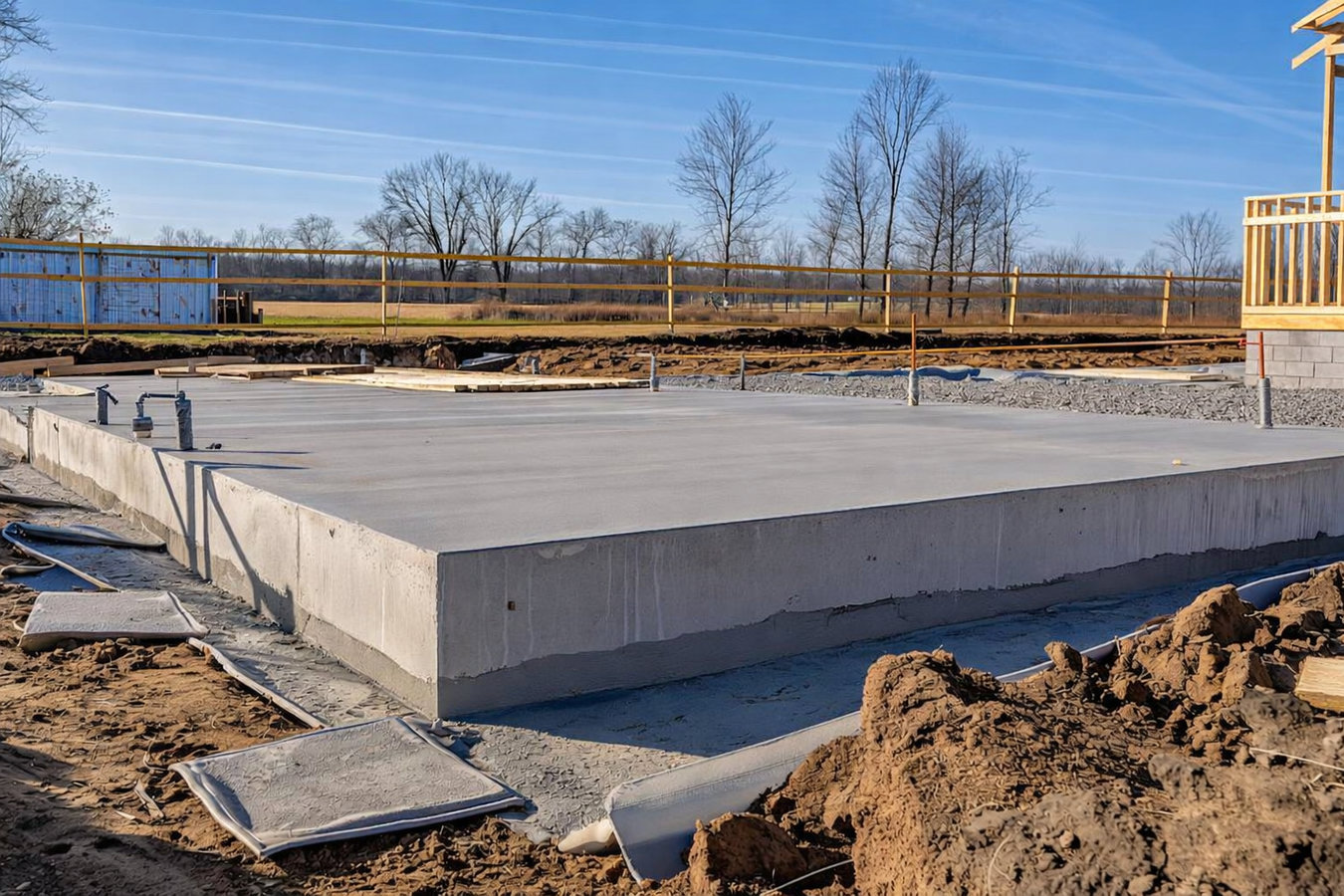
Building new or replacing a failing foundation in DeKalb? We handle the excavation, frost-depth footings, waterproofing, and permits so your home starts on ground that holds - through freeze-thaw cycles and wet Illinois springs.
Foundation installation in DeKalb, IL means excavating below the frost line, forming and pouring concrete footings and walls, waterproofing the exterior, and backfilling - with the full process from permit to final inspection typically running two to four weeks for a standard residential project.
Every other part of your home depends on this one structure. Walls crack, floors shift, and doors stop closing properly when a foundation fails - which is why getting the installation right the first time matters more here than almost anywhere else in a project. In DeKalb, that means going deep enough for the frost line, addressing the clay-heavy soil before anything is poured, and building in drainage that keeps water out year after year.
Homeowners building smaller structures often look at slab foundation building as a more affordable path, while commercial property owners sometimes pair foundation work with concrete parking lot building when developing a site from the ground up.
Diagonal cracks - especially ones wider at one end - are a sign the foundation beneath that part of the house has shifted or settled unevenly. In DeKalb's clay-heavy soils, this kind of movement is more common than in areas with stable, sandy ground. If you see these cracks appearing or growing, have a professional take a look before the problem gets worse.
When a foundation moves, the frame of the house moves with it - and doors and windows are often the first place you notice. If a door that used to swing freely now drags on the floor, or a window that used to open easily now sticks, the house is telling you something has shifted below. This is especially worth paying attention to in older DeKalb homes where the foundation has been through decades of freeze-thaw cycles.
DeKalb gets significant spring snowmelt and periodic heavy rain, and a foundation that is no longer doing its job will let that water in. Damp spots, white chalky deposits on the walls, or actual puddles after a wet spell all suggest the drainage system has failed - or the foundation itself has cracked. This is not a problem that fixes itself over time.
Look at your basement walls - they should be flat and straight. If a wall appears to be curving inward, even slightly, soil pressure from outside is pushing against a foundation that can no longer hold it. DeKalb's clay soils expand significantly when saturated, putting real force on basement walls. A bowing wall is a structural warning, not a cosmetic one.
Most homes in DeKalb are built on either a full basement foundation or a slab. Basements are common here because the frost line already requires footings to go well below grade - so going a bit deeper to create usable space is often cost-effective. A full basement foundation involves excavating down six to eight feet, pouring a continuous footing along the perimeter, and then pouring the basement walls using forms. Waterproofing the exterior walls and installing perimeter drainage are essential steps in this climate, not optional upgrades.
For new builds on tighter lots or for property owners adding an attached garage or room addition, a slab foundation may be the practical choice. The right answer depends on what you are building, the soil and drainage conditions on your specific lot, and your budget. We assess all of these together before recommending an approach. Commercial property owners looking to develop a full site often combine foundation work with concrete parking lot building to complete the project in one coordinated scope.
Suits homeowners who want usable below-grade space and are building in a climate where frost-depth excavation is already required.
Right for single-story additions, garages, and accessory structures where below-grade space is not needed.
An option for homes that need access below the floor but do not require full basement height - common in some older DeKalb neighborhoods.
DeKalb sits in a part of northern Illinois where the ground freezes to roughly 42 inches in a hard winter. Every footing on every foundation we install here has to go below that depth - no exceptions. Footings that stop short of the frost line will heave with the ground as it freezes and thaws, eventually cracking the foundation walls and the structure above. This deeper excavation is one reason foundation work costs more per square foot here than in warmer states, and it is one of the first things to confirm when comparing bids.
DeKalb County also sits on glacially deposited clay-heavy soils that hold water and shift as moisture levels change. A foundation installed without proper drainage and waterproofing in this soil will eventually let water in - not as a maybe, but as a certainty. We build drainage into every foundation installation from the start, not as an add-on. Homeowners in Rockford and Aurora face the same soil and climate conditions, and we approach those projects with the same attention to depth and drainage.
We visit your property to look at the soil, assess access for excavating equipment and concrete trucks, and discuss your project in detail before giving you any numbers. Written estimates come within one business day of the visit, and we are happy to walk through each line item with you.
A City of DeKalb permit is required before any foundation work begins, and we handle the application on your behalf. We also coordinate an 811 utility locate before any digging starts - a step required by Illinois law that protects your underground lines. Plan for permit review to add a few business days to the project start.
The crew excavates down past the frost line - roughly 42 inches minimum in DeKalb - grades and prepares the base, and sets concrete forms with rebar reinforcement inside. The pour typically happens in a single day for a standard residential foundation, delivered by ready-mix truck. Expect heavy equipment on your property and a significant amount of displaced soil during this phase.
After the concrete hardens and the forms come off, the exterior walls are treated with a waterproofing membrane and drainage material. The city inspector checks the work at key stages, then the excavated soil is backfilled around the foundation. Your contractor will walk you through care instructions - including keeping vehicle traffic away from the area for at least 30 days.
We visit the site, give you a written quote within one business day, and handle permits from start to finish.
(815) 981-3470We set every footing below the frost line - roughly 42 inches in DeKalb - on every project, not just the ones where the inspector is watching. Shallow footings fail in this climate. Going deep enough is not an upgrade; it is the baseline requirement for foundation work that holds up through northern Illinois winters.
DeKalb's clay soils hold water and expand when saturated, which puts real force on basement walls and foundation slabs. We treat drainage as a core part of installation - perimeter drain tile, gravel, and waterproofing membrane go in during the project, not as an add-on after water has already become a problem. The National Association of Home Builders recommends drainage be addressed during initial installation for exactly this reason.
Some contractors skip the permit process to save time. We do not. Every foundation installation we complete in DeKalb is permitted through the City of DeKalb Building Services office and passes a city inspection before we consider the job done. You receive all permit documentation at project completion - records that protect your home's value and your peace of mind.
Foundation installation is a significant investment, and the last thing you need is a final bill that looks nothing like the estimate. We give you a written, line-by-line quote that spells out every cost before a single shovel hits the ground - so you can compare it to other bids and make a confident decision without feeling kept in the dark.
Foundation installation in DeKalb is too significant an investment to get wrong, and too local a challenge to hand to a crew without northern Illinois experience. We are based here, we know the soil and the permit process, and we build every foundation to hold up in this specific climate.
For technical standards on residential concrete construction, the National Association of Home Builders and the University of Illinois Extension both publish guidance on foundation construction, soil conditions, and drainage in the Midwest. For permit requirements specific to DeKalb, the City of DeKalb Building Services office is the authoritative source.
Commercial and residential concrete parking lots in DeKalb - properly graded, reinforced, and built to handle Illinois freeze-thaw cycles and heavy vehicle loads.
Learn MoreSlab-on-grade foundations for garages, additions, and accessory structures - including full frost-depth prep and clay soil excavation.
Learn MoreReach out now to lock in a site visit and get your project on the schedule before the busy season is gone.