Serving DeKalb, IL and surrounding areas. (815) 981-3470
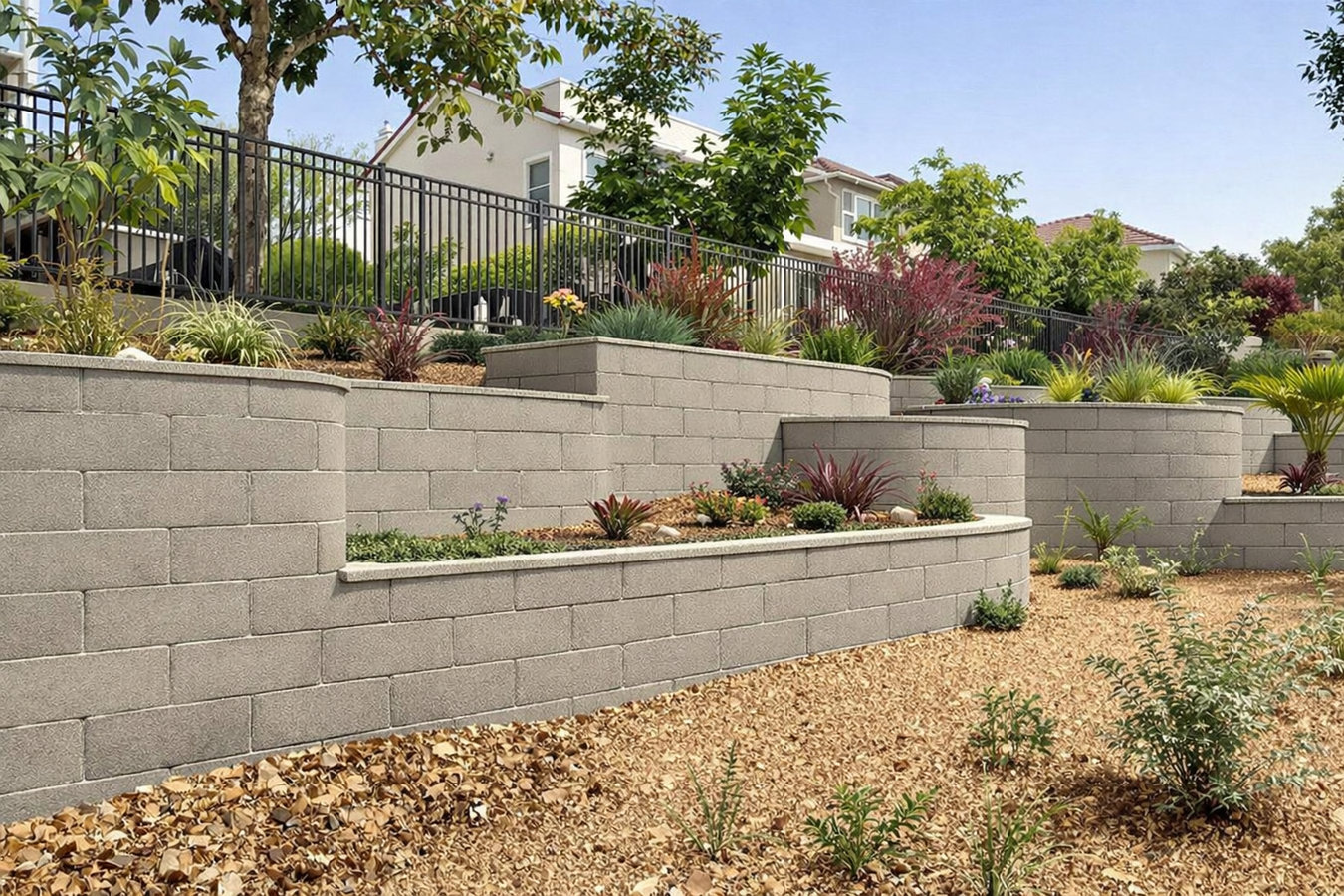
Slopes washing out or an existing wall starting to lean? We build concrete retaining walls in DeKalb with the deep footings, drainage, and permits your project needs to last through Illinois winters.
Concrete retaining walls in DeKalb, IL typically take two days to about a week to complete, depending on wall length, height, and site access. Most homeowners have a finished, backfilled wall within five to seven working days once the crew starts - and that includes drainage installation behind the wall.
If you have a slope that keeps washing out every spring, or an older wall that has started to lean or crack, a new concrete retaining wall is the most permanent fix available. Unlike timber or block alternatives, a properly built concrete wall does not rot, warp, or need to be rebuilt every decade. It holds the ground in place and stays there.
Retaining wall projects often go hand-in-hand with concrete floor installation when homeowners are also finishing a basement or leveling a slope for a new patio or walkway area.
If soil, mulch, or gravel migrates down a slope every time it rains hard, the ground is eroding faster than plants can hold it. DeKalb gets significant spring rainfall and snowmelt, and clay-heavy soil on a steep grade can lose material quickly. A retaining wall stops that erosion at the source.
A wall that is visibly tilting away from the slope, showing a belly in the middle, or developing cracks wider than a hairline is under more pressure than it can handle. In DeKalb's freeze-thaw climate, walls without deep footings or proper drainage often show these signs within five to ten years. A leaning wall can fail suddenly.
If a planting bed, hillside, or embankment sits right next to a hard surface or property line, there is no buffer to catch soil if it starts to move. This is common in older DeKalb neighborhoods where the original edging has worn away. A retaining wall creates a clean, permanent boundary.
If standing water collects close to your house after storms, a poorly graded slope may be directing water toward your foundation instead of away from it. DeKalb's spring thaw sends a lot of water across yards quickly, and clay soil does not absorb it fast. A wall with proper grading can redirect that flow before it becomes a basement problem.
Most residential retaining walls in DeKalb fall into one of two categories: poured concrete or concrete block (CMU). Poured walls are monolithic and extremely strong, making them the right choice for taller walls or sites where the soil puts significant lateral pressure on the structure. Concrete block walls offer more design flexibility and can be a good fit for shorter walls or decorative projects. Both require the same attention to footing depth and drainage to perform in this climate.
For homeowners who want to create a usable flat space on a sloped lot, a retaining wall is usually paired with grading and finishing work - sometimes including concrete steps construction to connect the different levels cleanly. We assess the site, the soil, and the slope together to recommend what will actually work long-term rather than just what is easiest to build.
Best for taller walls, steep slopes, or sites with significant soil pressure where monolithic strength is the priority.
Suits homeowners who want more design flexibility or are working with a shorter wall height on a moderate slope.
Right choice for larger slopes where a single wall would be impractically tall - breaks the grade into manageable steps.
Two factors shape every retaining wall project in DeKalb: the freeze-thaw cycle and the clay soil. The ground freezes hard here from late fall through March, and the frost line in this part of Illinois sits around 42 inches deep. A wall footing that does not reach below that depth will heave, tilt, and eventually fail - no matter how good the concrete itself is. That extra excavation depth is not optional in this climate, and any contractor who does not mention it is cutting corners.
The clay-dominant soil throughout DeKalb County holds water and shifts with every wet-dry cycle, which means drainage behind the wall is just as critical as the wall itself. We see this same challenge in projects we do for homeowners in Sycamore and Waukegan - the same glacial soil conditions exist across northern Illinois, and drainage is always part of the plan.
We schedule a time to walk your property and look at the slope, soil, and access before giving you any number. This visit takes 20 to 30 minutes, costs nothing, and results in a written estimate within one business day.
If your wall requires a City of DeKalb permit, we handle the application. We also coordinate an 811 utility locate before any digging begins - this is required by Illinois law and protects your underground lines.
The crew excavates down to the frost line - roughly 42 inches in DeKalb - before setting the footing. This is the noisiest and most disruptive part of the project. Expect equipment and dirt piles. This is normal and temporary.
Once the footing is set, we build the wall, install gravel backfill and drainage pipe behind it, then backfill with soil and grade the surface. Concrete needs about a week before heavy loads can go near it, and we tell you exactly what to avoid before we leave.
We respond within 1 business day. There is no obligation after your free on-site estimate. Once you submit, someone from our office will call to schedule a visit and walk through the project with you.
(815) 981-3470Every wall we build in DeKalb has footings set at least 42 inches deep - the local frost line. That depth is what separates a wall that stays put from one that starts leaning after the third winter. We do not quote you a frost-depth footing and pour a shallow one.
We install gravel backfill and perforated drainage pipe behind every wall, giving water a path out instead of letting it build pressure against the concrete. The American Concrete Institute notes that drainage failure is one of the most common causes of early wall failure - we treat it as a non-negotiable part of the job. Learn more at{' '} concrete.org.
We handle the City of DeKalb building permit application on your behalf, so the work is on record and reviewed by a city inspector. That paper trail protects you if you sell your home or need to make an insurance claim - and it means you never have to deal with the building department yourself.
You receive a written estimate that covers materials, labor, drainage, excavation, and permit fees before anyone picks up a shovel. The number on the estimate is the number on the invoice. If something unexpected comes up on-site, we call you before the scope changes.
A properly built retaining wall is one of the most permanent improvements you can make to a sloped property. When the footing depth, drainage, and materials are right, you should not need to think about that wall again for decades.
For permit requirements, visit the City of DeKalb Building Inspection Division. For Illinois utility locate requirements before digging, see Illinois JULIE (811). For concrete industry standards, visit the American Concrete Institute.
A new concrete floor for your basement, garage, or utility space - properly prepared, poured to the right thickness, and sealed for DeKalb winters.
Learn MoreConcrete steps built to match your retaining wall or entrance - slip-resistant, code-compliant, and graded to shed water away from your foundation.
Learn MoreSpring crews book fast once the ground thaws - reach out now to lock in your start date before the best weather window closes.